Locations


Four relative coordinate systems are measured and recorded in the Results table: Cartesian, Orthogonal, Normalized and Cylindrical.
Cartesian: The relative coordinates of the child particle are defined by the distances from both the X and Y axes of the image, expressed as signed distances from the origin (see Figure 1). The origin can be set at the center, the first pole or the second pole of the parent particle (see Origin for more details). Values are expressed in pixels or in calibrated units.
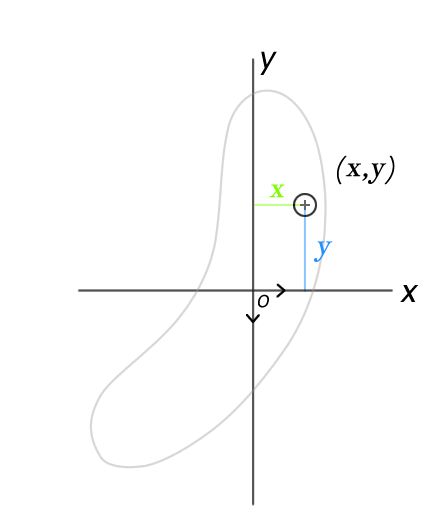
Figure 15: The relative Cartesian coordinate system.
Orthogonal: The relative coordinates of the child particle are defined as the position of the perpendicular projection of the child particle center onto the medial axis of the parent particle (X-coordinate) and the perpendicular distance between the child particle and the perpendicular projection (Y-coordinate), expressed as signed distances form the origin (see Figure 2). The X coordinate of the origin can be set at the center, the first pole or the second pole of the parent particle (see Origin below). By convention, the X-axis is oriented toward the first pole and the Y-axis is oriented toward the first side. Values are expressed in pixels or in calibrated units. If the child particle is assumed to form close to the parent particle surface, the Z-coordinate is defined using the relation  with
with  where
where  is the Y-coordinate and
  is the radius of the parent particle.
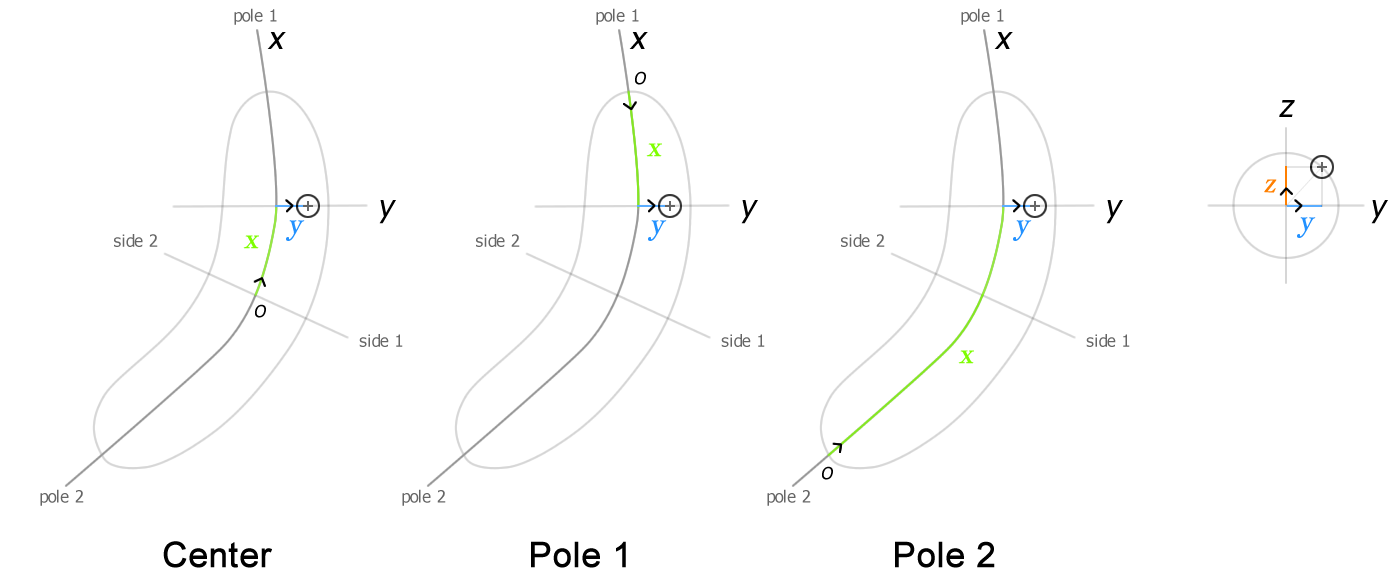
Figure 16: The relative orthogonal coordinate system according to the specified origin (Center, Pole1, or Pole2).
Normalized: The relative coordinates of the child particle are defined as the position of the perpendicular projection of the child particle center onto the medial axis of the parent particle (X-coordinate) and the perpendicular distance between the child particle and the perpendicular projection (Y-coordinate), expressed as signed and normalized distances form the origin (see Figure 3). The X coordinate of the origin can be set at the center, the first pole or the second pole of the parent particle (see Origin below). By convention, the X-axis is oriented toward the first pole and the Y-axis is oriented toward the first side. The Z-coordinate is defined using the relation  with
with  where
where  is the Y-coordinate and
  is the radius of the parent particle.
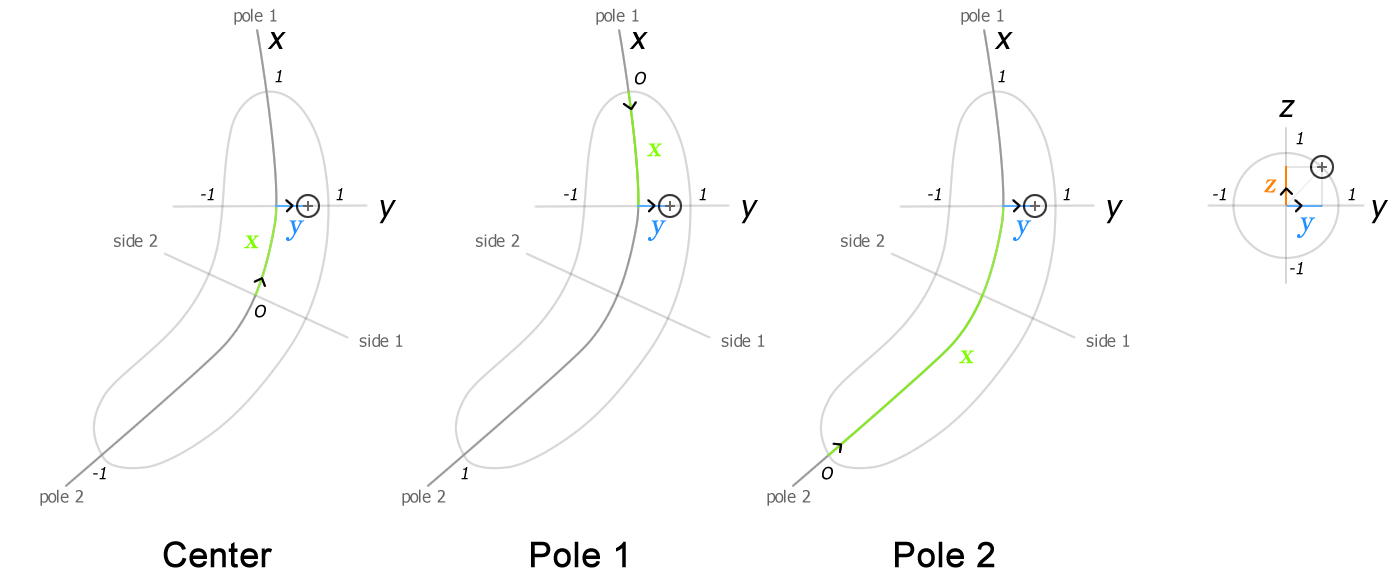
Figure 17: The relative normalized coordinate system according to the specified origin (Center, Pole1, or Pole2).
Cylindrical: The relative coordinates of the child particle are defined as the radial distance r, the angular position θ and the longitudinal position p. If the child particle is assumed to form close to the parent particle surface, the relative coordinates of the child particle are also defined by the elevation angle ϕ, the revolution angle β and the arc length L (see Figure 4) .
When the child particle is located in a pole region, the radial distance r is defined as the distance between the particle center and the closest end of the ‘short medial axis’ of the parent particle (cf. the segment of the medial axis between the origins of the two poles, Figure 17), the angular position θ is defined as the angle formed between the particle center and the axis of the closest pole, and the longitudinal position p is defined as the signed distance measured along the short medial axis of the parent particle from the parent particle center. The angular position θ is expressed in radians. The radial distance r is normalized by the radius  of the cell. The longitudinal position p is normalized by the length of the short medial axis. Note that the longitudinal position p is equal to 1 when the child particle is located in the pole 1 region and is equal to -1 when the child particle is located in the pole 2 region. Note that the angular position θ is positive when the child particle is located on the side 1 region and negative when the child particle is located on the side2.
When the child particle is located in the ‘short medial axis’ region, the radial distance r is defined as the perpendicular distance between the child particle center and the ‘short medial axis’ of the parent particle, the angular position θ is defined as the angle formed between the particle center and the ‘short medial axis’, and the longitudinal position p is defined as the signed distance along the short medial axis of the parent particle from the parent particle center. The angular position θ is expressed in radians. The radial distance r is normalized by the radius  of the cell. The longitudinal position p is normalized by the length of the short medial axis. Note that the angular position θ is equal to
  when the child particle is located on the side 1 region and is equal to
  when the child particle is located on the side2.
The elevation angle ϕ is defined using the relation  where
where  is the normalized radial distance. The elevation angle ϕ is expressed in radians. Note that the elevation angle ϕ is positive when the child particle is located on the upper side of the parent particle and negative when the child particle is located on the lower side of the parent particle.
The revolution angle β is defined as the angle formed between the particle center and the transversal axis of the parent particle. The revolution angle β is expressed in radians [0,2π].
The arc length L is defined using the relation  where β is the revolution angle and
  is the radius of the parent particle.
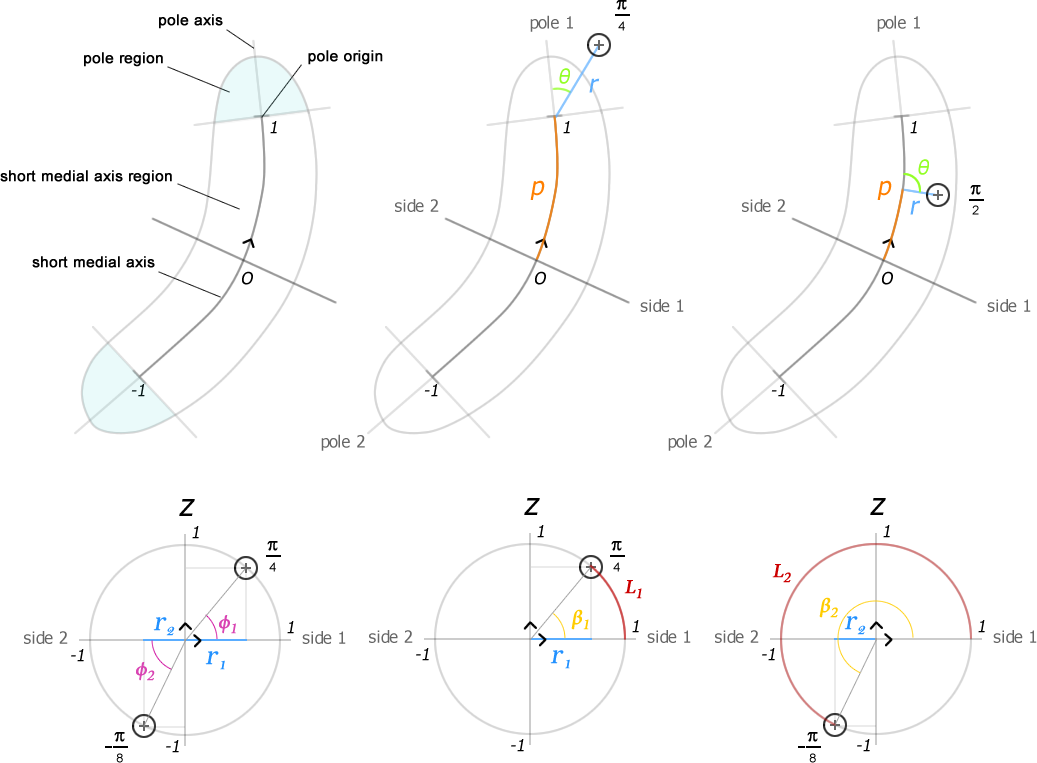
Figure 18: The relative polar/cylindrical coordinate system.
Created with the Personal Edition of HelpNDoc: Produce electronic books easily